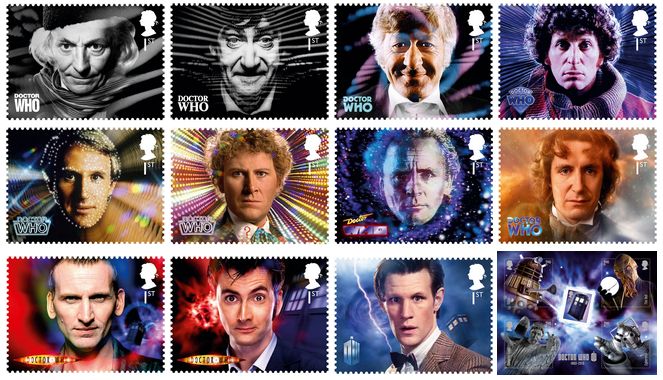
I had high hopes for Doctor Who going into 2010. New head-writer Steven Moffat, who has penned such classics as The Empty Child and Blink, was set to kick off a golden era of the show and cheeky, elbow-headed Matt Smith was to be the fresh face of it. Coming from the Tennant era with a superb actor and enjoyable, if a bit oversensationalised, stories from the Who Godfather Russell T Davies, was going to be interesting but we had high hopes.
What we got was not quite that. Granted, Matt Smith is a fantastic Doctor (he’s no David Tennant, but he was superb all the same), and we had some crackers in the last series, but there was a few things missing that was disappointing to an overly critical super-scrutiniser like myself. The sixth series (Eleven’s second) is already well into production and will undoubtedly have all the stories needed for filming locked down; but if Moffat wants to make sure that the hardcore Whovians aren’t beating him to death with a space-whale (seriously, wtf was that!) then here’s some tips.
1. Cut out the Amy-Rory-Doctor bullshit.
The whole back-and-forth in the last series about Amy having to choose between The Doctor and Rory was tedious and unrealistic. The Doctor’s an alien, you can understand him being oblivious to it but Rory clearly wasn’t and yet he stuck around for however-many episodes being a gormless, ineffectual moron about it. Oh yes, it was all part of his ‘character development’. Fine. But how did he manage to persuade anyone to marry him in the first place if he started off that spineless? Still, now that Amy’s had her epiphany, made her choice and they’re now married maybe it’ll stop, but it has to be complete stop. No more hints from Amy, either she stops flirting with The Doctor or Rory leaves the TARDIS, anything other than that would look stupid.
2. Put some thought into the ending of the episode
The last series had stories that were truly inspired as their premise, but it felt constantly as though the writer had only really thought through the premise and not the conclusion. Far too often did The Doctor flick a switch and the whole threat, forty-odd minutes of build-up, was completely neutralised and everything returned to normal; this is what’s known in Who-geek terms as a “fucking cop-out”. ‘The Vampires of Venice’, for example, has The Doctor effortlessly scaling a clocktower and flicking a switch, suddenly the tidal waves that threatened to flood the city were no longer an issue. There was never any feeling of danger, the little issue of height could’ve been a great source of peril but instead it felt like a minor inconvenience; they might’ve well put the switch at the top of a gentle incline and the audience would’ve felt less underwhelmed.
3. Use classic-series monsters…in moderation
Moffat always protests that he doesn’t like using the old series monsters, yet he’s guilty of doing so more than his predecessor (who was reknowned for it) in a quarter of the time. Just look at the penultimate episode of the series, not even past the first series and it looked like a Doctor Who convention on the planet ‘Cliché’. Nevertheless, there is no reason why you shouldn’t use old series monsters, it’s been done since…well, the old series…and they’re the reasons why Who is so recognisable and it’s always fun to see the reinvention of something that before would’ve been papier-mache and foam rubber. The thing that’s important to remember is that Doctor Who thrives on new ideas: use the classics, but give the lion’s share of the time to the inception of new monsters to try and create the classic-monsters of the future.
Oh and if you’re looking to save effects and costume budgets when using the Sontarans, just hire Eric Pickles.

4. Be scary, for fuck’s sake!
Look, Doctor Who has a reputation for being “hide behind the sofa” scary, but it hasn’t actually been that scary since 1984! Maybe I’m not in a position to comment here because, arguably, it’s a kids show (or at least a show that’s enjoyed by and is accessible to children) and I started liking Who when I was 14, but the scary-reputation and the scary-reality seem massively at variance. In the old days I guess children were made of stronger stuff, because a lot of it was scary, nightmare-inducing stuff. I agree that the source of fear should be psychological rather than simply buttering the screen with blood and gore, and the show in it’s modern guise does do that, but they’re so concious of censors, their timeslot and demographic that they intentionally tone down this horror and, as a result, create this generation protected from, and thus oversensitive to, fear. Nightmares are good, fear is fun, make the most of it!
This is not necessarily Moffat’s fault, we know how the BBC doesn’t like to frighten the horses and, as it’s funded by the license fee, will have to deal with the inevitable complaints of mollycoddling mothers instead of the quiet grumble of disappointed fanboys and fear-junkies. But Moffat should be constantly pushing the BBC, pushing the boundaries of what’s acceptable, pushing to expose children to more varied experiences than the banal, passive threats that it’s forced to do now; some of it will get through, and that will be the stuff that kids remember.
4. Stop ‘building up’ to things, because they’ll just disappoint.
I’m all for story-arcs, but they have a life-span. Russell T. Davies had a storyline that overarched the entire series, hints dropped here and there that The Doctor was usually completely blind to and were mainly for the benefit of the viewer; the smug feeling of noticing something that the Time Lord didn’t. The storyline has to come to a head at the end of the series and we have to learn most, if not all, of the detail behind it. If it’s dragged out over multiple series (as ‘The Silence’ storyline is) then, firstly, the viewer loses interest or forgets half of the details and, secondly, it seems bizarre to have The Doctor randomly knocking around the Universe being silly, like a great cosmic Harry Hill, as he (along with the viewer) learns increasingly more about what we can only presume is a massive, looming danger. If The Doctor doesn’t jump into action as soon as he knows something’s up (say, when he notices the cracks appearing in the whole fucking universe) then what’s the point of him?
Also, Whovians are fickle fellows; the fact that we practically worship a TV show should go some way to demonstrate the average attention span of us. Either the story-arc conclusion gets delivered fairly swiftly, or you make damned sure it’s worth the wait.
6. Keep it up
Ok, so I’ve been complaining but really the return of the show has been fantastic and massively enjoyable. The reimagining of it when Moffat took the rains was a well-timed reboot to keep the audience’s waning attention; I like Matt Smith and I like Steven Moffat. But I just think that these few little details could reign in the snobbish adults who dismiss it as “just a kids show” and turn it into a real phenomena.